Posts

Repatriation Flights

Repatriation Flights

The height of the COVID-19 pandemic and the travel bans related thereto forced numerous airlines to cancel their flights and left passengers stranded far away from their homes. In many cases, these passengers were only able to return home by using special flights organised by their states – so-called repatriation flights.

In its ruling regarding case C-49/22 the European Court of Justice (ECJ) answered key questions raised by the Austrian Regional Court Korneuburg in connection with repatriation flights.

In the case at hand, the claimant booked (as part of a package holiday) the flights OS 17, scheduled for 7 March 2020 from VIE to MRU, and OS 18, scheduled for 20 March 2020 from MRU to VIE, both to be operated by Austrian Airlines. While flight OS 17 went ahead as scheduled, flight OS 18 was cancelled due to the measures taken by the Austrian government due to the COVID-19 pandemic.

On 19 March the claimant was informed about the cancellation and the possibility to return to VIE by using a repatriation flight organised by the Austrian Ministry of Foreign Affairs, which was scheduled for 20 March at the flight time originally reserved for OS 18 and operated by Austrian Airlines under OS 1024. The claimant and his wife registered for this repatriation flight and had to pay an obligatory contribution of EUR 500 per person.

The claimant eventually filed a lawsuit against Austrian Airlines, demanding compensation of the obligatory contribution amounting to EUR 1,000 while referring to Regulation 261/2004. The District Court Schwechat decided in the claimant´s favour, which led to an appeal by Austrian Airlines and a request for a preliminary ruling of the ECJ.

The ECJ decided that a repatriation flight does not constitute a “re-routing, under comparable transport conditions, to [the] final destination” within the meaning of Article 8(1)(b) of Regulation 261/2004. Therefore, operating air carriers are not obliged to offer repatriation flights to passengers whose flights have been cancelled.

The ECJ further ruled that passengers do not have a right to reimbursement of obligatory contributions to repatriation flights at the expense of the operating air carrier on the basis of Regulation 261/2004.

Don´t hesitate to contact our Aviation Team to learn more about passenger claims in Austria.

Start-up-Förderungsgesetz

Das Start-up-Förderungsgesetz

Statement unseres Partners und Gesellschaftsrechtsexperten Robert Leuthner zum geplanten Start-up-Förderungsgesetz:

Das Start-up-Förderungsgesetz ist derzeit in Begutachtung – und wird bereits als der große Wurf gefeiert. Ist es das?

Man kann der Regierung zugutehalten, dass sie Unternehmertum und Innovation in Österreich fördern möchte, aber dann bitte richtig. Die Start-up-Mitarbeiterbeteiligung schießt aus meiner Sicht den Vogel ab: Nicht nur, dass die Kriterien zu unflexibel sind. Warum sollen gestandene und erfolgreiche KMU von diesen Möglichkeiten ausgenommen sein? Was macht Nicht-Start-ups so viel weniger unterstützungswert?

Ebenso fragwürdig ist die Einführung der neuen Gesellschaftsform FlexKap. Wozu braucht es in Österreich eine weitere Kapitalgesellschaftsform? Wir haben bereits die AG, die SE, die GmbH und die Genossenschaft. Das sollte doch reichen. Warum also nicht das GmbHG durchgreifend reformieren und damit für alle Unternehmen einen modernen, zukunftsorientierten und vor allem einheitlichen Rechtsrahmen schaffen?

Nicht falsch verstehen: Die Reform des österreichischen Gesellschaftsrechts ist längst überfällig. Start-up-Förderung ist unerlässlich. Die konkreten Maßnahmen sehen für mich aber leider weniger nach Reform als vielmehr nach politischem Aktionismus aus…

Kapitalerhöhung

Kapitalerhöhung schnell und unkompliziert

Ein Thema, das bei der Durchführung einer Kapitalerhöhung bei einer GmbH oft für lästige Verzögerungen sorgt, ist das Firmenbuch.

Bei einer Kapitalerhöhung müssen verschiedene Unterlagen vorgelegt werden, darunter das Generalversammlungsprotokoll, die Übernahmeerklärung und die Bankbestätigung. Dies führt häufig zu Verzögerungen bei der Eintragung, da Rechtspfleger gerne Haare in der Suppe finden – dann werden beispielsweise zum Nachweis der Zeichnungsbefugnis Firmenbuchauszüge einer Gesellschaft aus Ländern verlangt, die gar kein Firmenbuch kennen.

Eine einfachere und vor allem schnellere Alternative besteht darin, dass alle Gesellschafter pro rata Anteile zum Nennwert oder gratis an den neuen Investor abtreten. Der Investor verpflichtet sich separat zur Leistung eines Gesellschafterzuschusses in der Differenz zwischen dem Abtretungspreis und der Gesamtinvestitionssumme. In diesem Fall hat das Firmenbuch nichts zu prüfen, was den Prozess erheblich beschleunigt (wir sprechen in der Regel von maximal zwei bis drei Tagen). Die Anmeldung muss nicht einmal beglaubigt sein.

Diese alternative Vorgehensweise bietet eine praktische Lösung für Unternehmen, die eine Kapitalerhöhung schnell und einfach durchführen möchten und bei dem alle Gesellschafter an einem Strang ziehen – das spart allen Beteiligten Zeit und Geld.

Unser Partner Robert Leuthner und das Team von Weisenheimer Legal finden gerne die optimale Lösung für Sie und Ihr Unternehmen.

Unexpected absence of a crew member

In its ruling in joined cases C-156/22 to C-158/22 the European Court of Justice (ECJ) decided that the unexpected absence of a crew member does not constitute extraordinary circumstances and can, therefore, not release an operating air carrier from its obligation to pay compensation to passengers in case of cancellations or great delays.

The case at hand concerns a flight that should have been operated by TAP from Stuttgart (Germany) to Lisbon (Portugal), on 17 July 2019 with a departure scheduled at 6.05. However, on the morning of this day, at 4.15, the co-pilot that should have operated the flight concerned was found dead in his hotel bed. Shocked by this event, the whole crew declared itself unfit to fly. As there was also no replacement staff available in Stuttgart (outside TAP’s base), the flight was cancelled. The passengers were transported to Lisbon on a replacement flight scheduled at 16.40 on the same day.

The ECJ decided that the unexpected absence – due to illness or death of a crew member whose presence is essential to the operation of a flight – which occurred shortly before the scheduled departure of that flight, does not fall within the concept of extraordinary circumstances.

This is in line with the ECJ´s prior court practice that declared that measures relating to the staff of the operating air carrier fall within the normal exercise of the air carrier´s activities and, therefore, are not suitable for constituting extraordinary circumstances that could relieve an air carrier from its obligation to pay compensation to its passengers.

Don´t hesitate to contact our Aviation Team to learn more about passenger claims in Austria.

Strikes in Europe as extraordinary circumstances

Strikes in Europe as extraordinary circumstances

The aviation sector in Europe is currently experiencing a substantial number of strikes. There are nationwide protests in France due to a reform of the retirement system, strikes organised by the union for employees in the traffic sector in Germany, works meetings at Austrian Airlines, strikes by the security staff at London Heathrow airport, and strikes by the ground-handling staff of Swissport in Spain.

As a result, air carriers are forced to delay or cancel numerous flights and are confronted with unsatisfied passengers – and their claims for compensation payments under Regulation 261/2004. The question arises if the current strikes in Europe can lead to extraordinary circumstances within the meaning of Art 5 (3) of this regulation and could, therefore, exempt air carriers from their payment obligations.

This article aims to illustrate the relevant criteria when assessing strikes and to give an overview of court practice of the European Court of Justice (ECJ) and Austrian courts on different categories of strikes.

The principles:

Already in its ruling C‑549/07, the ECJ stated that for events to be regarded as extraordinary, they (i) must not be inherent in the normal exercise of the activity of the air carrier concerned and (ii) must be beyond the actual control of that carrier on account of its nature or origin.

These principles must also be kept in mind when evaluating cases of strikes.

Categories of strikes:

Since there is a variety of cases when it comes to strikes, a categorization is necessary to give general answers to types of strikes based on the principles mentioned above.

Strikes by the air carrier´s employees concerning demands vis-a-vis the air carrier

This category includes strikes that aim to enforce demands vis-a-vis the air carrier, especially for better working conditions or higher salaries.

The ECJ dealt with such cases on several occasions and concluded that such strikes, in general, do not constitute extraordinary circumstances. This is in line with the abovementioned principles, because such strikes are often inherent in the normal exercise of the activity of an air carrier and not beyond its actual control.

Examples of cases in which the ECJ stated that such strikes cannot constitute extraordinary circumstances are C-195/17 concerning “wildcat strikes” (the spontaneous absence of a significant part of the flight crew staff), and C-287/20 and C‑28/20, both concerning strikes organised by a union to enforce higher salaries.

Strikes by the air carrier´s employees for other reasons

This category is not as common as the first category, but currently of special relevance due to the numerous strikes France in connection with the reform of the French retirement system. The reasons for such strikes are not connected to the air carrier and it is not within the air carrier´s power to meet the demands of the strikes.

Such strikes are generally regarded to constitute extraordinary circumstances, because they are not inherent in the normal exercise of the activity of an air carrier and are beyond its actual control. Consequently, the ECJ stated in its ruling C-28/20 that strikes that originate from demands that only the public authorities can satisfy are capable of constituting extraordinary circumstances.

Strikes by others than the air carrier´s employees

In cases, in which the employees of other entities are on strike, it must be differentiated.

If an air carrier chooses to use another company to perform tasks that typically fall within its own responsibilities, such as check-in, ground-handling or de-icing of aircraft, strikes of the employees of such companies must be treated as if the air carrier´s own employees would have been on strike. Therefore, if such strikes concern demands vis-a-vis these companies, they can generally not constitute extraordinary circumstances, while strikes for other reasons can.

Consequently, the Austrian court for commercial matters (Handelsgericht Wien) in case 1 R 87/22y and the district court Schwechat in cases 20 C 221/20f, 20 C 98/20t and 20 C 234/20t decided that strikes of employees of a ground-handling company used by the air carrier, that protest a decision of an Austrian authority, can constitute extraordinary circumstances.

Strikes by employees of entities which are not used by an air carrier to perform tasks that typically fall within its own responsibilities, such as airport security or air traffic control, are generally regarded to be capable of constituting extraordinary circumstances.

In its ruling C-28/20, the ECJ states that strikes that are external to the activity of the air carrier, such as strike actions taken by air traffic controllers or airport staff, may constitute extraordinary circumstances. The Austrian regional court Korneuburg reaches the same conclusion in its cases 22 R 209/21x and 22 R 9/22m that concern a strike by air traffic control employees.

Closing remarks:

It should be highlighted that even in cases of extraordinary circumstances air carriers are only exempt from their obligations to make compensation payments if all reasonable measures within the meaning of Article 5 (3) of Regulation 261/2004 have been taken by them. Furthermore, Austrian courts usually demand detailed explanations and evidence regarding extraordinary circumstances. In practice, many court cases are lost because air carriers cannot meet these requirements and not because the strike in question was not capable of constituting extraordinary circumstances.

Therefore, it is essential to work with specialists in this field and to closely assess each case to have clarity about the chances of succeeding in court proceedings before investing substantial resources in them. Don´t hesitate to contact our Aviation Team to learn more about passenger claims in Austria.

Börsepeople im Podcast

Börsepeople Podcast mit Dominik Leiter

Unser Partner Dominik Leiter mal wieder in einem Podcast, diesmal bei Christian Drastil bei Börsepeople im Podcast.

Mit ein paar spannenden Stories aus dem Kapitalmarkt vergangener Zeiten. Über Weisenheimer Legal. Und noch ein paar anderen Geschichten.

Für alle Interessierten ist die Folge unter dem folgenden Link abrufbar: https://audio-cd.at/page/podcast/4053/

Dawicon Podcast

DAWICON Podcast mit Dominik Leiter

Unser Partner Dominik Leiter hat es wieder getan: Diesmal ist er der Einladung von Daniel Winkler gefolgt, um im DAWICON-Podcast darüber zu sprechen, was man als Deutsche(r) bei der Gründung in Österreich beachten sollte. Dominik verrät, welche wesentlichen Unterschiede man etwa bei Kapitalerhaltungsvorschriften oder im Arbeitsrecht unbedingt im Blick haben sollte – reinhören lohnt sich!

Für alle Interessierten ist die Folge unter dem folgenden Link abrufbar: https://letscast.fm/sites/dawicon-cfo-insights-145b3440/episode/48-internationalisierung-was-man-bei-einer-gruendung-in-oesterreich-beachten-sollte-interview-mit-ra-dominik-leiter

Lexology GTDT Air Transport Austria

Lexology GTDT: Air Transport in Austria

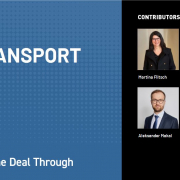
We are happy to share that our Aviation Team was chosen to author the chapter on Air Transport in Austria in the latest edition of Lexology´s Getting the Deal Through (GTDT).

The GTDT´s aim is to give readers quick access to country specific insights to a variety of topics. Thus, it is crucial for contributors to have a wide range of expertise while also being able to deliver relevant information in a compact, but still comprehensive way.

Luckily, our aviation team was perfectly prepared for this challenge. With our partner, Martina Flitsch, leading the way with her over 25 years of experience in the aviation field assisted by our two associates, Dominik Weiß and Aleksander Makal, who were, despite their young age, already able to gather several years of experience in advising many players on a variety of aviation related topics.

We invite you to check out the GTDT on Air Transport in Austria by clicking here (pdf) and to reach out to us for further information.

Reproduced with permission from Law Business Research Ltd. This article was first published in Lexology GTDT – Air Transport 2023. For further information, please visit: https://www.lexology.com/gtdt

Air carrier liability for psychological injuries

Air carrier liability for psychological injuries

The Montreal Convention is a multilateral treaty for the unification of several rules for international air carriage to which 136 states and the European Union are parties. It is of major significance for the aviation sector and contains, inter alia, provisions on an air carrier´s liability in case of an international flight. Article 17 of the Montreal Convention stipulates that an air carrier is liable for damage sustained in case of death or bodily injury of a passenger caused by an accident that took place on board of an aircraft or while embarking or disembarking. Since the term “bodily injury” is not defined in the Montreal Convention, questions were raised whether air carriers can also be held liable for psychological injuries under the Montreal Convention.

In case C111/21, the Court of Justice of the European Union (CJEU) had to deal with such a case. The passenger in question embarked a flight operated by the former Austrian air carrier Laudamotion between London and Vienna. During take-off, the left engine of the aircraft exploded, causing an evacuation of the passengers. The passenger in question disembarked the aircraft via the emergency exit and was hurled several metres through the air by the jet blast from the right engine, which had not yet been shut down. As a consequence, the passenger suffered not only physical, but also psychological harm.

The Austrian courts (District Court Schwechat and upon an appeal the Regional Court Korneuburg) were of the opinion that psychological injuries do not fall within the meaning of “bodily injury” and are therefore not covered by Article 17 of the Montreal Convention. However, the passenger brought the case before the Austrian Supreme Court, which decided to refer this question to the CJEU.

The CJEU argued by taking into account the preparatory works which led to the Montreal Convention and its objectives that the situation of a passenger who has suffered a psychological injury as a result of an accident may be comparable to that of a passenger who has suffered bodily injury. Consequently, the CJEU stated that according to Article 17 of the Montreal Convention air carriers are liable for psychological injury, which is not linked to bodily injury. However, only if the passenger can demonstrate (by means in particular of a medical report and proof of medical treatment) the existence of an adverse effect on his psychological integrity of such gravity that it affects his general state of health and that it cannot be resolved without medical treatment.

Don´t hesitate to contact our Aviation Team to learn more about the application of the Montreal Convention in Austria.

Consequences of a travel agency´s actions for air carriers

Consequences of a travel agency´s actions for air carriers

In two recent decisions, the Court of Justice of the European Union (CJEU) dealt with the consequences of a travel agency´s actions for air carriers in context with Regulation 261/2004.

In case C-307/21, the passengers booked flights from Düsseldorf to Tangier via the travel agent Kiwi.com. The air carrier was provided with an e-mail address, which was most likely automatically generated by Kiwi.com and to which the passengers had no access. In the following, the air carrier sent an e-mail to this e-mail address in order to inform the passengers about the cancellation of their flight. Since this e-mail has been sent 14 days prior to the date of the scheduled flight, it would have complied with Article 5 (1) (c) (i) of Regulation 261/2004, resulting in the passengers not being entitled to receive a compensation within the meaning of Article 7 of Regulation 261/2004. However, Kiwi.com did not forward this e-mail to the passengers.

The CJEU decided on 27 September 2022 that the air carrier is obliged to pay a compensation to the passengers if the travel agency didn´t forward the air carrier´s e-mail in due time even if the air carrier was not aware of the fact that the e-mail address it has been provided with could only be used to contact the travel agency and not the passengers directly.

In case C‑436/21, a passenger booked the following itinerary: Stuttgart-Zurich-Philadelphia-Kansas City. The flight from Stuttgart to Zurich was operated by Swiss International Air Lines AG, while the other two flights were operated by American Airlines. This itinerary was booked via a travel agency in the form of a single electronic ticket with a single user price for the entire journey and the number of this ticket was displayed on the boarding passes relating to the flights. While the previous flights were on time, the flight from Philadelphia to Kansas City was delayed by more than four hours.

During the proceedings initiated in Germany against American Airlines, the involved German courts stated that Regulation 261/2004 does not apply, since American Airlines did not operate a flight departing from the territory of a member state of the EU. According to the German courts, there was nothing to indicate that American Airlines had undertaken to transport the passenger from Stuttgart to Kansas City, or that it had assumed responsibility for that transportation under a code sharing agreement. Subsequently, the case was brought before the German Supreme Court and the CJEU.

In its ruling C-436/21 the CJEU stated that – in the interest of the high level of protection for passengers – the concepts of “connecting flights” and “reservations” must be interpreted broadly, which lead to the CJEU´s decision that there has been a connecting flight even though the operating air carriers did not have a specific legal relationship. Therefore, the place of departure (Stuttgart, Germany) is of relevance, Regulation 261/2004 is applicable, and the passenger may be entitled to a compensation payment for the delay of his last flight leg.

Don´t hesitate to contact our Aviation Team to learn more about the consequences of a travel agency´s actions for air carriers in connection with Regulation 261/2004 and about passenger claims in Austria in general.